

Making Tax Digital for Income Tax – Are you ready?
Making Tax Digital for Income Tax (MTD for ITSA) is being introduced in stages for landlords and sole traders. Depending on your qualifying income, you may already need to comply or need to prepare for a future start date.
What is Making Tax Digital for Income Tax?
Making Tax Digital (MTD) for Income Tax is an HMRC initiative that changes how eligible sole traders and landlords keep their financial records and report their income.
Under MTD, those who are required to comply must use compatible software to keep digital records of their business and property income and expenses, submit quarterly updates to HMRC and complete a final tax return at the end of the tax year.
Quarterly updates provide HMRC with summaries of income and expenses throughout the year. They are not tax returns, and they do not replace the final year end submission.
The aim is to make tax reporting more digital and help taxpayers maintain accurate records throughout the year.

Digital record keeping
Keep your property income and expenses recorded digitally and organised throughout the year.

Compatible software
I can help you set up Sage accounting software for Making Tax Digital, helping you keep accurate digital records of your business or rental income and expenses and prepare for quarterly updates to HMRC.
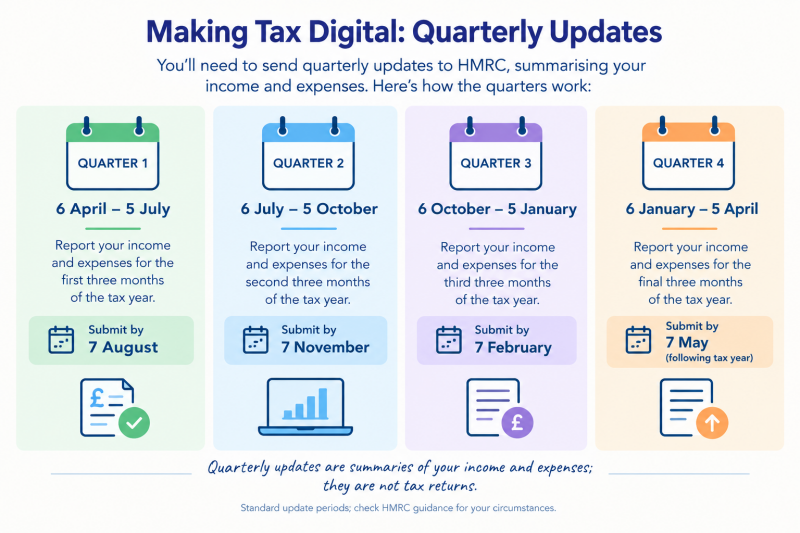
Quarterly updates - Standard Periods
Keep your records up to date throughout the year so your quarterly income and expense information is ready to be submitted through MTD compatible software, such as Sage, before each HMRC deadline.

Quarterly updates - Calendar Periods
The submission deadlines are the same as for the standard accounting periods: 7 August, 7 November, 7 February and 7 May (the following tax year).
Who will need to comply?
Making Tax Digital for Income Tax applies to sole traders and landlords who are registered for Self Assessment and whose combined gross income from self-employment and property exceeds the relevant threshold.
The rules are being introduced in stages:
-
From 6 April 2026: qualifying income over £50,000.
-
From 6 April 2027: qualifying income over £30,000.
-
From 6 April 2028: qualifying income over £20,000.
Qualifying income is the total income from self-employment and property before deducting expenses. If you receive income from both sources, they are combined when assessing whether you meet the threshold.
Some individuals may qualify for an exemption. Check the latest HMRC guidance to confirm whether the rules apply to you.
For more information about eligibility and the requirements, visit the official HMRC guide to Making Tax Digital for Income Tax.
How VHK Bookkeeping can help
Preparing for Making Tax Digital starts with keeping accurate digital records and ensuring your bookkeeping is up to date.
I support landlords and sole traders by helping them:
-
Keep their income and expenses accurately recorded.
-
Maintain digital bookkeeping records using compatible software.
-
Review and reconcile transactions regularly.
-
Prepare their records for quarterly updates and year-end reporting.
Whether you need help getting your records up to date or ongoing bookkeeping support, I can help you prepare for the changes and maintain reliable records throughout the year.
Get Ready for Making Tax Digital
Making Tax Digital is a significant change for many sole traders and landlords. Preparing in advance can help you understand what is required, identify any gaps in your current bookkeeping and put suitable systems in place.
If you are unsure whether your bookkeeping is ready, book your free Property Health Check to discuss your current records and the support you may need.